Blood tests that look for several cancers at once to be trialled in 200 GP surgeries
More than 20,000 patients aged 45 and over who see their GP with symptoms such as persistent bloating will be offered a place in the government-funded STRIDE-RCT trial in England.
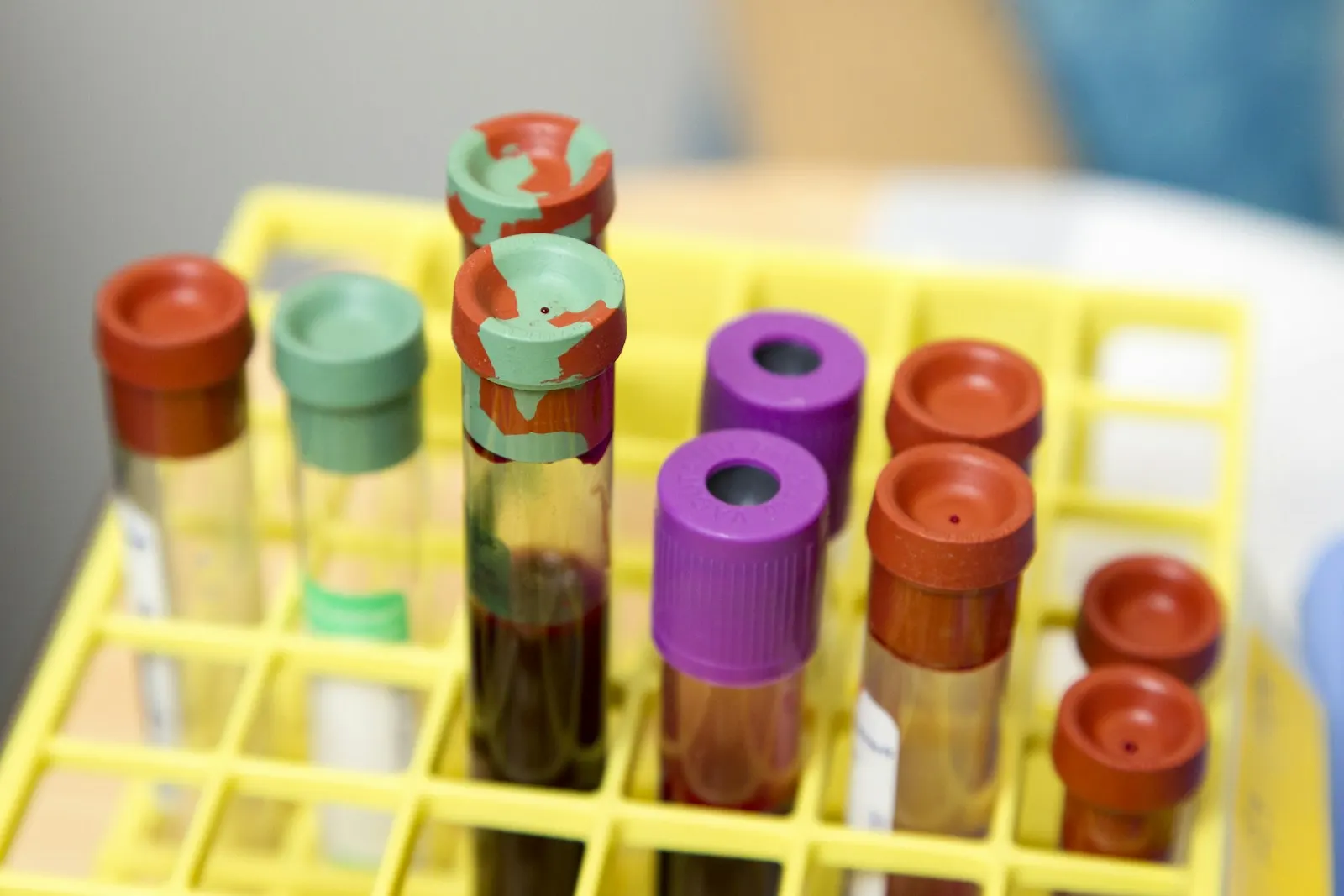
Patients aged 45 and over who go to their GP in England with abdominal symptoms, such as persistent bloating or discomfort, may be asked to take part in a trial of new blood tests designed to pick up a number of cancers from one sample.
The trial, called STRIDE-RCT, is being run by the University of Birmingham across at least 200 GP practices and aims to recruit more than 20,000 NHS patients. It has up to £8.49 million of government funding from the Office for Life Sciences, through the National Institute for Health and Care Research.
The tests
Most people taking part will give one or two tubes of blood at their surgery, at the same time as their routine blood tests. Scientists then look for markers in the blood, such as certain proteins, that can be a sign of cancer. The tests also try to show where in the body a tumour might be.
The trial covers cancers of the bowel, small bowel, stomach, oesophagus, pancreas, liver, bile duct and gallbladder, ovary, endometrium (the lining of the womb), kidney, bladder and prostate. Several of these are hard to spot early because the first symptoms are vague and easily put down to something less serious.
The trial will look at how well the tests work alongside GPs' own judgement.
Earlier diagnosis
Around 71,000 people in England are diagnosed with pancreatic, stomach, liver, ovarian or bowel cancer each year, and almost 35,000 die from these cancers. Finding them before they spread gives patients a better chance of successful treatment.
The aim is to find out whether the blood tests are accurate enough to help GPs decide which patients with unclear symptoms need urgent further investigation. Only after that will a decision be made on whether to use them across the NHS.
The surgeries taking part cover inner-city, rural, seaside and deprived communities.